
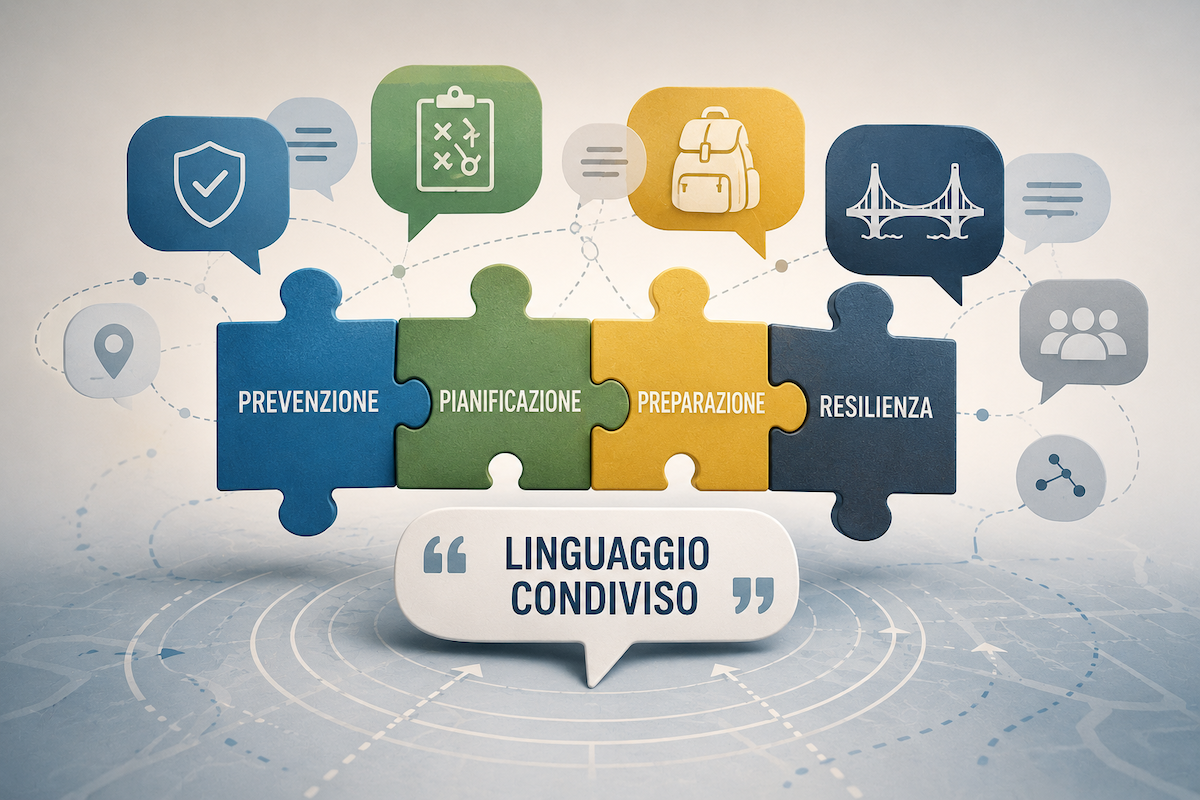
Prevenzione, pianificazione, preparazione e resilienza:l’importanza di un linguaggio condiviso
Le parole che utilizziamo, e il modo in cui le comprendiamo, influenzano non tanto l’approccio che adottiamo per affrontare gli eventi avversi, quanto le logiche che seguiamo nella nostra preparazione, soprattutto quella di chi fa parte del processo decisionale.
Termini come prevenzione, pianificazione, preparazione e resilienza sono spesso impiegati impropriamente, pur identificando concetti distinti e tra loro non complementari. Sono termini che devono essere chiari nel loro significato per evitare errori che potrebbero condurre a una deficitaria gestione delle emergenze o di governo delle crisi.
In questa breve nota vengono proposte alcune definizioni condivise, utili a costruire un linguaggio comune tra professionisti, istituzioni e operatori del settore.
PREVENTION – PLANNING – PREPAREDNESS – RESILIENCE:
The importance of a shared language
The words we use, and the way we understand them, influence not so much the approach we use to deal with adverse events, but the logic we follow in our preparation, especially that of those who are part of the decision-making process.
Terms such as prevention, planning, preparedness and resilience are often used improperly, even though they identify distinct and non-complementary concepts. These are terms that must be clear in their meaning to avoid errors that could lead to a deficit in emergency management or crisis steering.
In this brief note, some shared definitions are proposed, useful for building a common language between professionals, institutions and operators in the sector.
PREVENZIONE
Consiste nell’adozione di interventi e comportamenti in grado di evitare o ridurre l’insorgenza e lo sviluppo di una patologia o di un evento sfavorevole. Si pensi, ad esempio, alla prevenzione antincendio o alla prevenzione sanitaria (il vaccino, il check up periodico o anche l’esercizio fisico e l’alimentazione).
Si può quindi prevenire attraverso le norme, i comportamenti (e quindi l’addestramento nel caso degli operatori del soccorso), o semplicemente con il buon senso (ad esempio non attraversando la strada senza verificare che non stiano arrivando automezzi).
La prevenzione, quindi, da un lato evita l’insorgere di una specifica fattispecie (l’incendio, ad esempio, di apparati elettrici, attraverso le norme che ne regolano costruzione, montaggio e uso) oppure, nel caso in cui una fattispecie si sia già verificata (l’incendio, nel nostro esempio), ne limita le ulteriori nefaste conseguenze: le norme antincendio di un’autorimessa, i dispositivi di rilevamento del fumo, le porte antincendio e antifumo e così via.
Nell’ambito della sicurezza dello Stato, campo di attività della Difesa Civile, prevenire è compito dei Servizi e delle Forze dell’Ordine. Le conseguenze gravi di un evento comunque occorso possono essere contenute attraverso corrette pianificazioni e procedure operative.
PREVENTION
It consists in adopting interventions and behaviors capable of avoiding or reducing the onset and development of a pathology or an unfavorable event. Consider, for example, fire prevention or health prevention (vaccination, regular check-ups, or even physical exercise and proper nutrition).
Prevention can therefore be achieved through rules and behaviors (hence training, in the case of first responders), or simply through common sense (for instance, not crossing the road without checking whether vehicles are approaching).
Prevention, therefore, on the one hand prevents the occurrence of a specific event (for instance, a fire involving electrical equipment, through regulations governing its construction, installation and use) or, where such an event has already occurred (in our scenario, a fire), mitigates its further harmful consequences: fire safety regulations for a garage, smoke detection systems, fire and smoke doors, and so on.
In the field of State security, which falls within Civil Defense, prevention is the task of the Intelligence Services and Law Enforcement Agencies. The serious consequences of an event that has already occurred can be mitigated through sound planning and operating procedures.
PIANIFICAZIONE
La pianificazione è il processo di riflessione sulle attività necessarie per raggiungere un obiettivo desiderato o per evitare che particolari fattispecie, attese o meno, possano infliggere ancora più danni. Pianificare non richiede solo l’uso della logica; anche l’immaginazione ha un ruolo importante. Per entrambi gli aspetti è cruciale, se non essenziale, la preparazione ad ampio spettro dei pianificatori.
Pianificare vuol dire stabilire con esattezza cosa fare, in quale caso farlo, chi lo debba fare, quali possibili conseguenze possano derivare dalle scelte effettuate e individuare, quindi, azioni alternative per raggiungere lo scopo prefissato. È questa la classica pianificazione per le emergenze di Protezione Civile. Per i terremoti, ad esempio, si suddivide il territorio in zone sismiche, determinando per ciascuna zona le caratteristiche dell’evento sismico atteso in base agli eventi storicamente registrati nella stessa area o geologicamente evidenti. Si pianificano, quindi, per quanto attiene all’intervento, le linee di comando, la predisposizione, il reperimento e l’impiego di uomini e mezzi e quant’altro necessario. Il tutto preceduto da misure preventive (leggi antisismiche) che non sono ovviamente concepite per impedire l’arrivo del terremoto, ma emanate per ridurre i conseguenti danni e la perdita di beni e persone. La pianificazione emergenziale si basa quindi essenzialmente su un livello di conoscenza molto alto dell’evento atteso.
Diverso è il caso della cosiddetta Pianificazione per la Crisi. Per l’essenza stessa del significato di crisi, non si può essere preparati per il suo arrivo. Se fossimo preparati, semplicemente la crisi non si produrrebbe.
In cosa consiste, dunque, una pianificazione di crisi? È un’attività essenzialmente volta a individuare possibili eventi e i loro effetti sul territorio, studiando le concatenazioni che tali eventi produrranno in termini di danni e possibili richieste di uomini e mezzi, partendo dal presupposto, non semplice, che in ogni caso al momento del verificarsi della crisi la pianificazione non potrà offrire risposte esaurienti sul da farsi, ma fornirà, PRECEDENTEMENTE al verificarsi dell’evento, un quadro esaustivo del chi fa cosa e, quindi, di come prepararsi per affrontarlo al meglio. Pandemia? Scorta di DPI e macchinari per la ventilazione. So già che non saranno sufficienti, quindi individuazione o creazione di stabilimenti produttivi, contratti di fornitura ecc. Attacco chimico/radiologico? Modifica delle procedure di intervento standard delle Forze del Soccorso, acquisizione di materiali, addestramento, revisione dei Piani Ospedalieri, individuazione dei responsabili della decontaminazione di massa e della decontaminazione dei mezzi tecnici ecc. Ovviamente si tratta solo di indicazioni minime, parte di altre centomila cose da fare.
PLANNING
Planning is the process of considering the actions needed to achieve a desired goal or to prevent particular situations, whether anticipated or not, from causing further damage. Planning does not rely on logic alone; imagination also plays an important role. For both aspects, planners’ broad-based preparation is crucial.
Planning means determining exactly what to do, in which circumstances to do it, who should do it, and what possible consequences the choices made might have, and thus devising alternative courses of action to achieve the intended goal. This is the classic approach to Civil Protection emergency planning. For earthquakes, for example, the territory is divided into seismic zones, determining for each zone the characteristics of the expected seismic event based on events historically recorded in that area or geologically evident there. Planning then covers, as far as the response is concerned, chains of command, the arrangement, sourcing and deployment of personnel and equipment, and anything else required. All of this is preceded by preventive measures (anti-seismic legislation) which are, of course, not designed to prevent an earthquake from occurring but are issued to reduce the resulting damage and loss of property and life. Emergency planning therefore relies essentially on a very high level of knowledge of the expected event.
The case of so-called Crisis Planning is different. By the very nature of a crisis, one cannot be prepared for its arrival: were we prepared, the crisis simply would not occur.
So, what does crisis planning consist of? It is essentially an activity of identifying possible events and their effects on the territory, studying the chains of consequences that these events will produce in terms of damage and possible demands for personnel and equipment, starting from the assumption, not an easy one, that when the crisis actually occurs, planning will not be able to provide exhaustive answers on what to do. It will instead provide, BEFORE the event occurs, a comprehensive picture of who does what and, therefore, of how to prepare to face it in the best possible way. Pandemic? Stockpiling PPE and ventilation equipment. We already know these will not be sufficient, hence the need to identify or establish manufacturing capacity, supply contracts, and so on. Chemical or radiological attack? Amending the standard intervention procedures of the emergency services, procuring materials, training personnel, revising hospital plans, and designating those responsible for mass decontamination and for decontaminating technical equipment, among other measures. These are, of course, only minimal indications and represent a fraction of the many other tasks involved.
PREPARAZIONE
L’obiettivo principale della preparazione ad affrontare eventi estremi è identificare le azioni, le strutture e i mezzi necessari per ridurre al minimo possibile le conseguenze di quanto accaduto. Individuare azioni, strutture e mezzi è solo il punto di partenza: occorre poi creare quanto necessario se non esistente, procurarselo e renderlo pienamente operativo.
La parte più importante della preparazione è l’addestramento delle Forze di intervento, l’efficienza e l’efficacia dei mezzi loro forniti, la chiarezza e la condivisione delle linee di comando tra tutti gli attori coinvolti, nonché l’adeguata preparazione dei decisori di alto livello. Occupare una posizione rilevante nella catena di comando e controllo dovrebbe presupporre che chi la ricopre sia in grado di assumere le decisioni giuste non solo nella normalità della giornata lavorativa, ma anche nell’eccezionalità di eventi gravi o gravissimi che coinvolgono la propria struttura e quelle collegate; ciò, purtroppo, è tutt’altro che scontato.
Un altro aspetto fondamentale nella preparazione è lo studio della situazione giuridica nell’accadimento di eventi estremi, con la predisposizione di norme o regolamenti efficaci o la modifica di leggi già esistenti.
PREPAREDNESS
The main objective of preparedness for extreme events is to identify the actions, structures and resources needed to reduce as much as possible the consequences of what happened. Identifying actions, structures and resources is only the starting point; what is required must then be created if it does not already exist, procured, and made fully operational.
The most important part of preparedness is the training of response forces, the efficiency and effectiveness of the equipment provided to them, ensuring that lines of command are clear, known and shared among all stakeholders, and that senior decision-makers themselves are adequately prepared. Holding a key position in the chain of command and control should imply that the person occupying it is able to make sound decisions not only in the routine of everyday office work but also in the exceptional circumstances of serious or very serious events affecting their own organization and other related ones; unfortunately, this is far from guaranteed.
Another fundamental aspect in the preparedness is the study of the legal situation in case of extreme events, the drafting of new effective rules or operational procedures or the modification of existing laws.
RESILIENZA
La resilienza NON EVITA che un evento accada, NON IMPEDISCE un attentato terroristico o un’azione di guerra ibrida. Parlare di resilienza, pianificare per la resilienza, attuare i piani di resilienza, significa che SIAMO STATI COLPITI e che ci hanno arrecato un grave danno, altrimenti non si starebbe parlando di resilienza: resistere al colpo si chiama RESISTENZA, NON RESILIENZA.
Se colpiti, il delta tra come eravamo prima e come siamo dopo aver concluso tutti gli interventi di ripristino rappresenta la misura di quanto siamo resilienti.
Considerato che il concetto di resilienza è strettamente connesso al fatto di essere stati colpiti duramente, rientra nella resilienza anche il processo culturale che induce a riflettere sugli eventi occorsi per adottare tutti quei provvedimenti volti a evitare che fatti analoghi possano ripetersi.
Per completezza, nei grandi eventi a conduzione umana, durante le guerre ad esempio, la consapevolezza da parte del soggetto attaccante che un determinato asset sia altamente resiliente potrebbe indurlo a non sprecare risorse belliche per colpire quel dato bersaglio. Questa casistica non rientra nella RESISTENZA o nella RESILIENZA, bensì, semmai, nella PREVENZIONE.
RESILIENCE
Resilience DOES NOT PREVENT an event from happening; it DOES NOT PREVENT a terrorist attack or an act of hybrid warfare. Talking about resilience, planning for resilience, implementing resilience plans, means that WE HAVE BEEN HIT, and hit hard, otherwise there would be no reason to talk about resilience at all: withstanding the blow is called RESISTANCE, NOT RESILIENCE.
If hit, the gap between how things were before and how they are after all restoration efforts have been completed represents the measure of how resilient we are.
Given that the concept of resilience is closely linked to having been hit hard, it also encompasses the cultural process that leads us to reflect on the events that occurred, to adopt measures aimed at preventing similar events from happening again.
For the sake of completeness, in large-scale human-driven events, during wars for example, an attacking party’s awareness that one of our assets is highly resilient could lead that party not to waste military resources striking that particular target. This scenario falls not under RESISTANCE or RESILIENCE but, if anything, under PREVENTION.
Giovanni Ferrari, Architect – Architect · CBRN Expert · Crisis Management Advisor · Civil Emergency Planning Expert